
IN THE DOCTOR'S WORDS
THE TZMI TECHNIQUE by Dr. Andrea Tedesco
by Cristina Vannuzzi
The minimally invasive zygomatic technique.
We meet Dr. Andrea Tedesco, with his warm Florentine/Neapolitan smile and charm, dental surgeon and Specialist in Oral Surgery.
Dr. Andrea Tedesco is the author of an innovative technique, the TZMI technique, Minimally Invasive Zygomatic Technique—a brilliant insight aimed at solving complex clinical problems where traditional surgery remains difficult and entails uncomfortable postoperative recovery for the patient. Seemingly hopeless cases caused by severe maxillary atrophy, trauma, tumors, and above all previous unsuccessful surgeries can be resolved with this innovative technique.
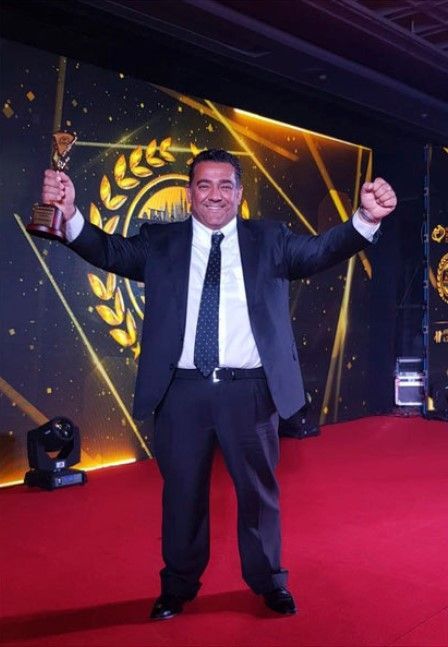
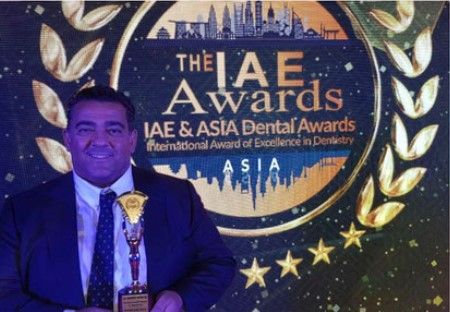
Doctor, how does it feel to go from Dentist to recipient of the Oscar of Dentistry, the International Award of Excellence, Best Dentist Award - Zygomatic Implantologist, the most coveted recognition in your field?
In 2016, after years of dedication and numerous surgeries performed, I received my first award as true recognition of my technique: at the Royal Society of Medicine on Wimpole Street in London, I presented my technique and won a highly coveted award, especially given the prestigious venue.
Subsequently, in July 2018, I was conferred the Award Innovation in Dentistry, and a year later, awed by the austere setting of the House of Commons in Westminster, I was honored with the International Award of Excellence 2019 as Best Dentist Award - Zygomatic Implantologist—an accolade that bestows upon its recipient an aura of prestige and great international acclaim within the scientific community.
I am proud and naturally thrilled, yet well aware of the many challenges I faced when I first realized I was developing a new technique—challenging, delicate, and completely unprecedented.
Could you tell us the story?
I am not a designer, just a simple "craftsman," because I tried to bring to life what I had in mind: a technique that could rely on an instrument—a simple insert—to draw on the maxillary bone an implant site like a pencil on paper, thus creating a new approach. This became possible when I finally found a company, an Italian one no less, that followed my specifications and put it into production.
Where did the need that led to your insight originate?
Over the past decades, oral surgery techniques have developed rapidly, primarily to address the need to make surgery less invasive and therefore more predictable. Within this context, dental implantology in particular has advanced significantly to increasingly address complex cases of bone deficiency. Dental implants are placed within the maxillary bones of partially or fully edentulous patients to subsequently support fixed or removable prostheses. When bone volume allows, this is straightforward, but the problem arises when insufficient bone volume makes it impossible to place implants. For these distressed patients, the issue is therefore not only the inability to chew, but also a social burden that affects daily life for someone who is no longer able to smile or lead a normal social life—creating an enormous psychological challenge.How did your insight come about?
At this point, the choice was either regenerative surgery—which is not always feasible and remains difficult and unpredictable, with numerous failures documented in the literature—or seeking to place implants where bone is actually present, in which case the zygomatic bone becomes an ideal site to utilize.And that is how your project took shape.
By modifying the classic protocols of an invasive, hazardous, and destructive zygomatic surgery that relies on long, sharp, dangerous, and often difficult-to-handle drills, it is possible to use an ultrasonic piezoelectric device (a cutting-edge technology already applicable across various fields, including not only implantology, but also periodontology, maxillofacial surgery, and many others): essentially, the instrument cuts hard tissues—bone—with extreme precision while preserving adjacent soft tissues, which are often vital anatomical structures such as blood vessels, nerves, etc. There are many piezoelectric devices in the world, yet to date only one offers a series of dedicated inserts for zygomatic implant surgery: in collaboration with the manufacturing company, I developed a specific surgical protocol consisting of new dedicated inserts for zygomatic surgery, creating an approach that makes every step highly controlled and easy to manage.Will training courses also be required for this difficult procedure?
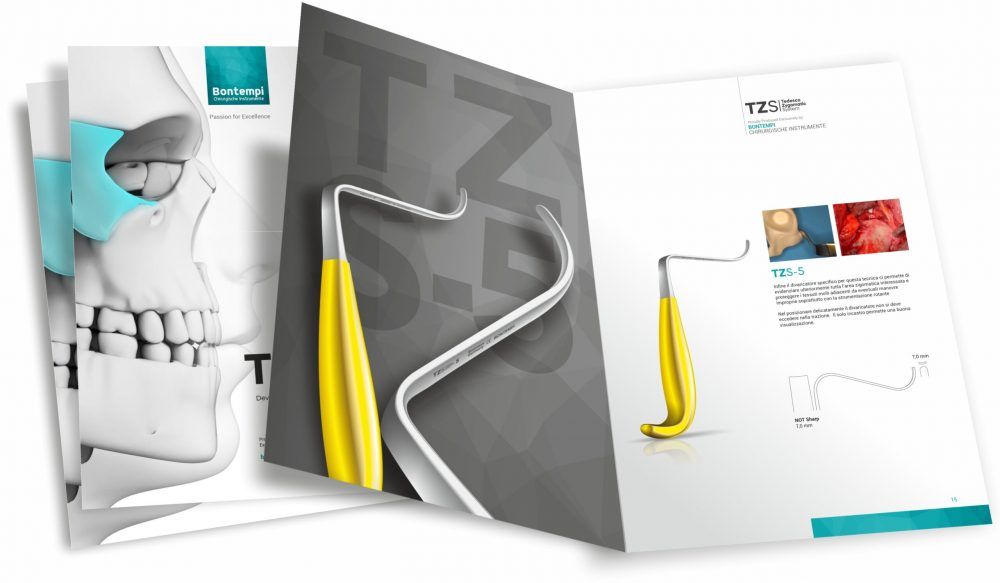
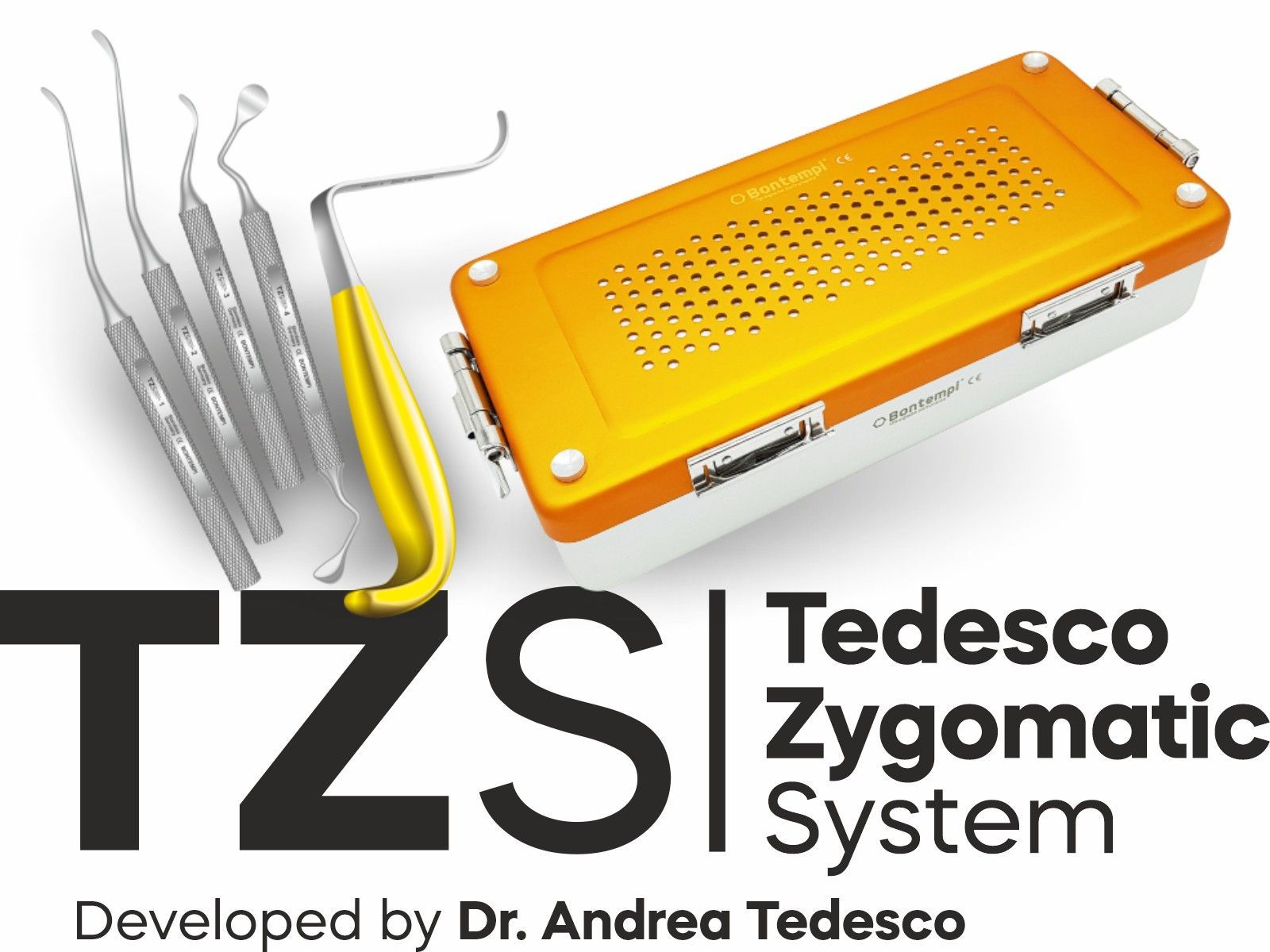
Clearly, zygomatic surgery remains an extremely complex procedure intended for experienced surgeons, yet with proper clinical indications and sound operator training, significant and predictable results can be achieved—a solution developed through experience and confidence in pursuing ambitious goals, craftsmanship, and passion for researching technological solutions critical to the project's success: in short, a minimally invasive technique for maxillary atrophy using zygomatic implants and piezoelectric instrumentation. My passion for this surgery led me to develop it even further; in fact, I also designed dedicated surgical instruments in collaboration with another Italian company, Bontempi, which has operated internationally in this sector for years, manufacturing instruments of the highest quality. Finally, a new zygomatic implant I designed—embodying all the aforementioned minimally invasive concepts—has recently entered production. Manufactured by the Italian company AoN, this new implant is the ideal solution for treating these severe atrophies.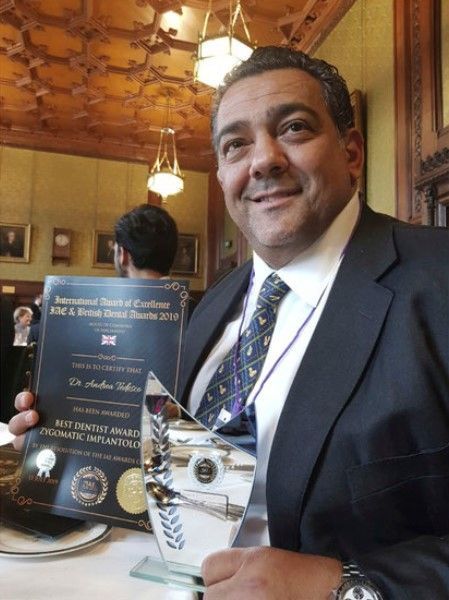
Where in Italy have you performed this type of procedure?
Everywhere, both in Italy and abroad, but especially at the University of Pisa, where I currently hold a university appointment and where the research to refine this technique began. Thanks to Prof. Mario Gabriele, former Director of the Operative Unit of Odontostomatology and Oral Surgery, I perfected the technique by performing increasingly complex procedures with excellent outcomes. Another key factor was the support of the company that manufactures these instruments, ESACROM ELECTRONICS AND MEDICAL TECHNOLOGY, which provided us with the instrumentation for research so that the procedures could be performed free of charge. Naples also brought a great milestone, as it was an immense satisfaction for me to be invited to my hometown by Professor Salvatore Parascandolo, Director of the Maxillofacial Surgery Department at Cardarelli Hospital, to perform a delicate procedure on a patient involved in a serious accident. These results also inspired me to establish a Second-Level International Master’s Degree in "Zygomatic Implantology" to share the technique widely, enabling other surgeons to specialize in it and bring its benefits to their patients—a program that continues to attract great international interest.Source: GRANDANGOLARE